Showing posts with label cake. Show all posts

Saturday, November 12, 2011

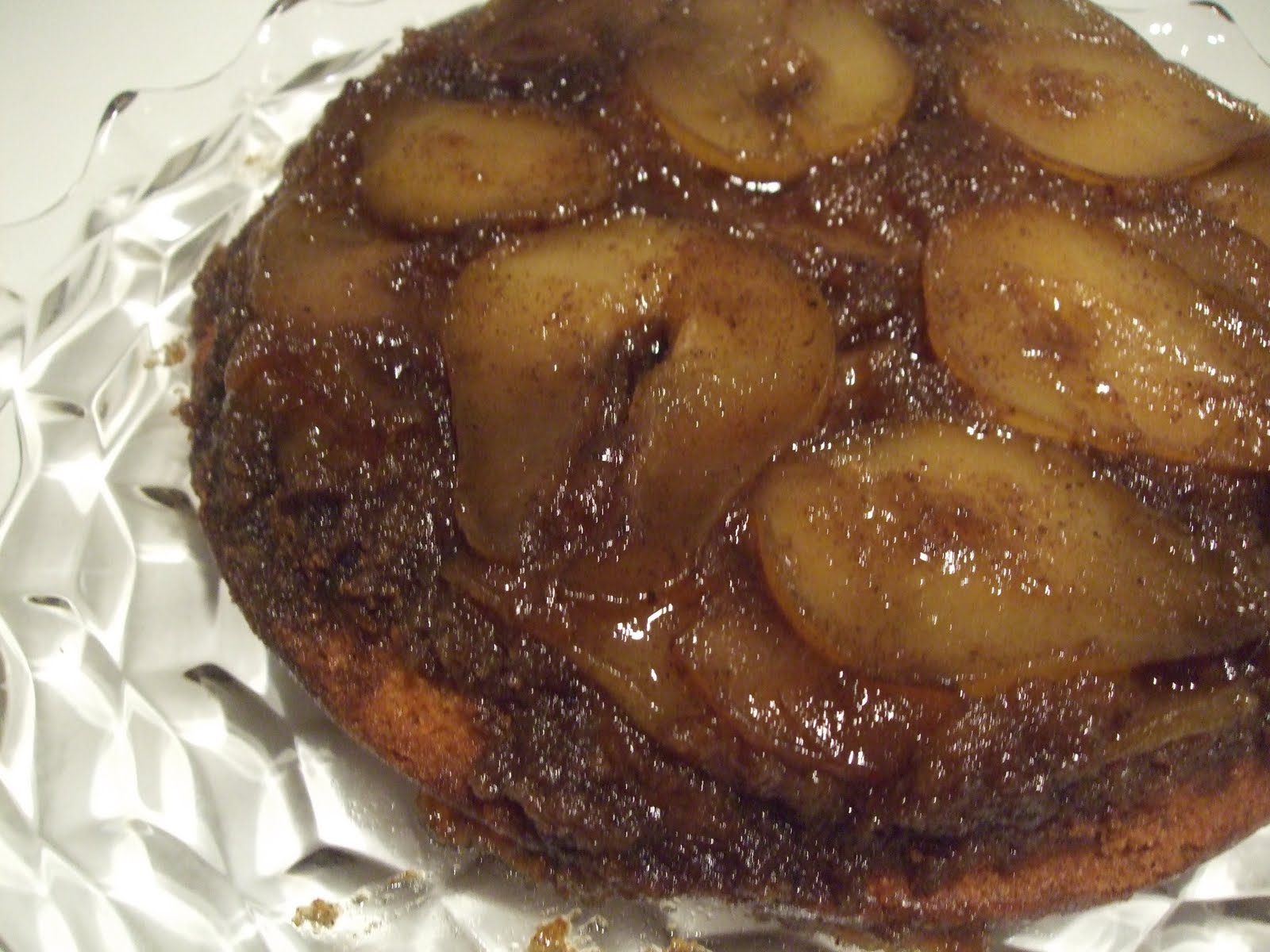
Spiced Pear Upside-Down Cake


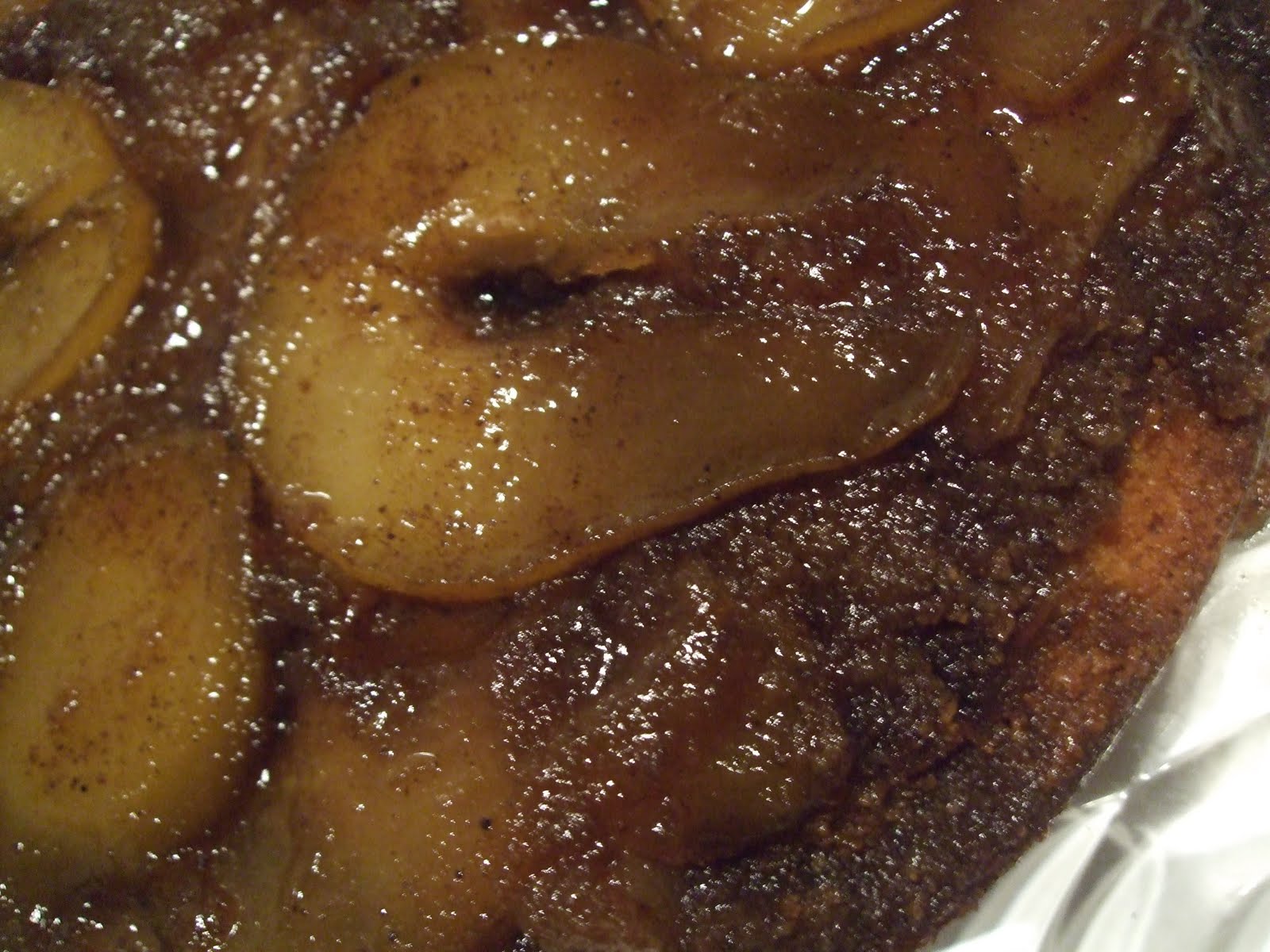
I love how this cake shines like the star that it is. It's a nice spin on the Tarte Tatin concept - caramel layer over fruit embedded in a buttery cake, baked upside down and flipped out of the pan onto a serving platter.

Add the fall spices and maple syrup, and the fact that it is an easily-executed success with good texture to the cake, and it's a winner in my book. I think apples could be substituted for the pears; I actually prefer this recipe to all the Tarte Tatins I've tried making thus far. While I continue my quest for a tasty but easy Tarte Tatin, this will work nicely.


Spiced Pear Upside Down Cake

12 T plus 5 T unsalted butter, plus more for greasing
2/3 C brown sugar
2 T maple syrup
2 ripe pears (Bartlett or Anjou preferred), peeled, halved, and cored
3/4 C plus 1 T granulated sugar
1 tsp ground cinnamon
1 tsp ground cardamom or nutmeg
1/4 tsp ground cloves
1 1/2 C flour
2 tsp baking powder
1 tsp salt
3/4 C milk
2 tsp vanilla
2 eggs


Preheat oven to 350 degrees. Butter a 9-inch round cake pan.

With a wooden spoon, vigorously beat the 5 T butter, brown sugar, and maple syrup in a mixing bowl until well blended. Spread the mixture over the bottom of the buttered cake pan.

Cut the pear halves into 1/4-inch slices and place in a bowl. Sprinkle with the 1 T granulated sugar, cinnamon, cardamom/nutmeg, and cloves and stir gently to coat. Arrange the pears in the bottom of the pan, fanning them and overlapping them slightly so the narrower ends point outward, and filling in the gaps with the smaller pieces (it never looks neat when I arrange fruit!).

Whisk together the flour, baking powder, and salt in a mixing bowl. Pour the milk and vanilla into a glass measuring cup.

In a stand mixer with the paddle attachment, beat the remaining 12 T butter and 3/4 C granulated sugar until fluffy. Beat in the eggs one at a time, scraping down the sides after each addition. With the speed on low, add the flour in 3 additions, adding half of the milk mixture between each flour addition. Increase the speed to medium-high and mix for 2 minutes.

Scrape the batter into the pan and spread evenly over the pears with a rubber spatula. Bake 60-70 minutes, until a toothpick comes out clean from the center.

Once finished baking, immediately loosen the sides of the cake from the pan with a butter knife. Place a large plate (at least 10 inches in diameter) upside down over the cake pan and carefully flip the cake out onto the plate, lifting the pan off the cake (shaking it if necessary to unstick it). Let cool for at least 30 minutes before serving.


Friday, July 8, 2011

Lemon Olive Oil Cake


Since I'm currently sharing an apartment in Berlin with six other people who frequently share food with each other, I've been trying to contribute baked goods to the kitchen from time to time. For Europeans, I like to bake simple desserts that aren't too sweet, which could serve as dessert, breakfast, or snack with tea or coffee. I started out with an almond cake, which went over well (and, incidentally, is gluten-free and incredibly easy), and then decided to work out a lemon cake. Lemon and olive oil being a proven flavor combination, I thought it would be nice to have an even quicker alternative to my lemon olive oil cupcakes.


I adapted this recipe from a French vanilla cake recipe; it's a simple, lightly sweet, and moist cake, with a touch of lemon to make it fresh. I replaced about a third of the melted butter with olive oil, added lemon zest and juice, and poured over some lemon glaze for a finishing touch. It formed a nicely browned crust in the metal loaf pan I used, so I'd highly recommend a metal pan if possible!


Lemon Olive Oil Cake
(so sorry, I don't have access to American measuring equipment here, so grams will have to do for now; use Chocolate and Zucchini's conversion page if necessary)

3 eggs
170 g sugar
zest of one lemon
160 g flour
1/2 T baking soda (about 1/2 European packet)
125 g butter
1/3 C olive oil
juice of 1/2 lemon

Preheat the oven to 350 degrees F/180 degrees C. Butter and flour a large loaf pan (i.e., rub butter along the sides and bottom of the pan, then pour about 1 T flour into the pan and shake it around to lightly coat each buttered surface, shaking the excess flour out into the sink or trash can).

In a mixing bowl, whisk together the eggs, sugar, and lemon zest until it becomes frothy and lightens in color. Pour in the flour and the baking soda and whisk it into the mixture as you pour.

Melt the butter in a small bowl, add the olive oil and the juice of half a lemon, and then stir the liquids into the rest of the mixture. Pour the entire mixture into the prepared loaf pan. Bake for 35-40 minutes; it's done when a knife or toothpick comes out clean.

Let cool.


Lemon Glaze

juice of 1 lemon
100-150 g powdered sugar

Place the juice in a small bowl. Stir in enough powdered sugar to thicken and sweeten the juice (it will still be a little runny, but the consistency is not super sensitive). Once the cake has cooled at least a bit, pour the glaze over the cake. Let it solidify, then serve!


Thursday, June 30, 2011

St. Louis Gooey Butter Cake


Wow, I can't believe I never posted this! I started a draft of this post more than a year ago, and here I am again.

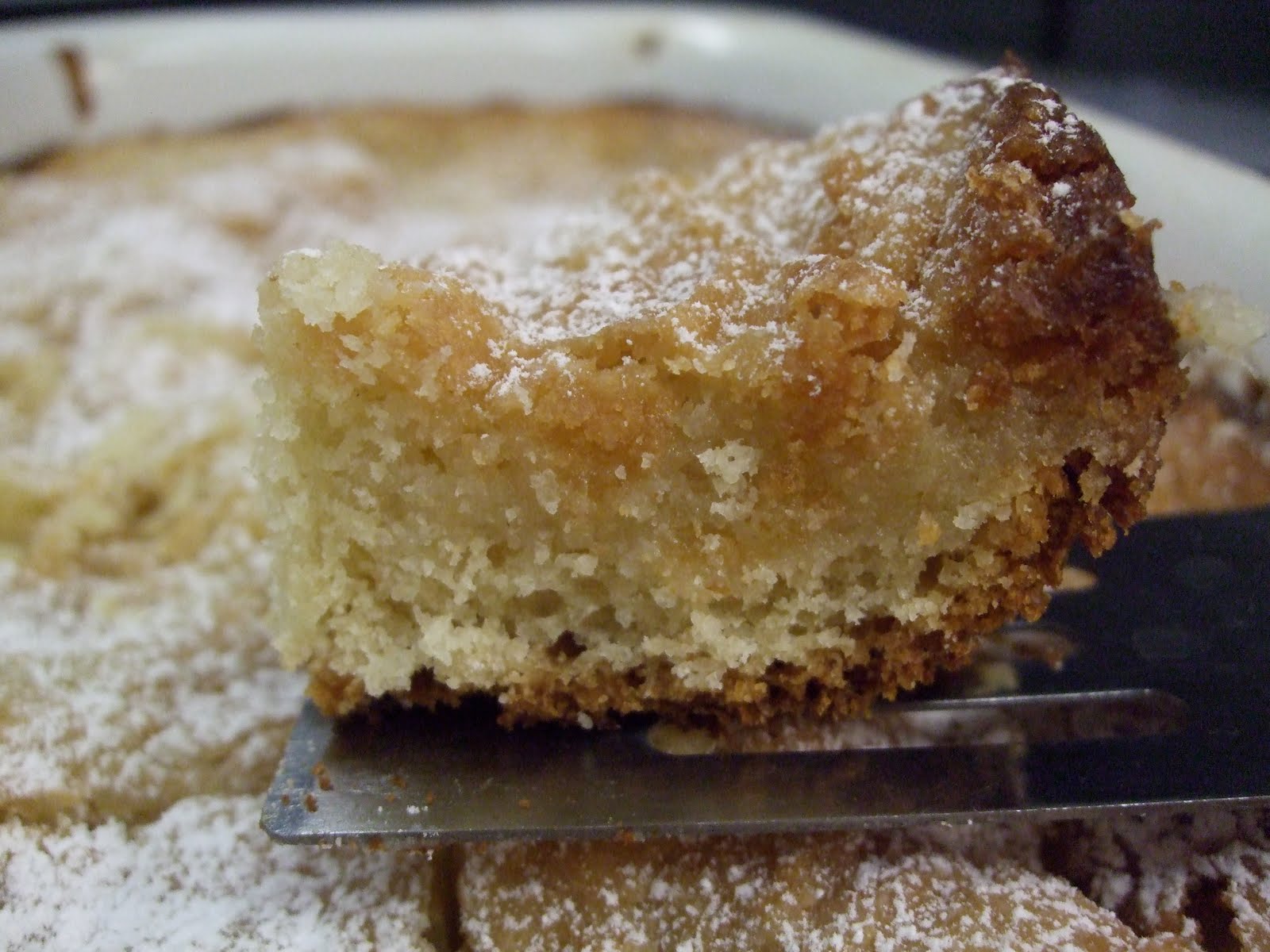
Despite the delay since I actually made this cake, it is absolutely worth posting. I still remember very clearly this unique and delightful cake, not too sweet and oh so buttery. There is something fascinating to me about a yeasted cake, with a slightly gooey topping that sort of seeps into the bottom cake layer. Like many of my favorite recipes, this one comes from smittenkitchen.

The layered cake concept also brings to mind a blueberry ricotta cake I recently made from King Arthur Flour, which is also a two-layered cake, but in this case tends towards a cheesecake consistency with an upper layer of a ricotta mixture (check it out since I didn't take any photos to make a post of it!). I am further reminded of this recipe for Lemon Cake Top Pudding, which ends up, well, with a cake-like top after you bake it, and pudding underneath - so interesting! Will make that one of these days.

In any case, I do not know why or how this comes from St. Louis, but I'm certainly glad it did! Whoever named it "gooey" and "butter" deserves a reward, because it is both of those things to everyone's delight.

See how the top layer gooeys into the bottom?? I take great pleasure in thinking of the word "gooey" as a verb - to gooey, gooeying, gooeyed. Why not? No other English word really has the same nuance.


Let's do this thing! Take care to save time for letting the dough rise, and make sure to not over bake it (see the instructions on baking pan choice). A stand mixer is necessary for the long periods of time that the dough gets beaten; a handheld electric mixer would not be hardy enough.

St. Louis Gooey Butter Cake

Cake ingredients:
3 T milk at room temperature
1 3/4 tsp active dry yeast
6 T unsalted butter at room temperature
3 T sugar
1 tsp kosher salt
1 large egg
1 3/4 C flour

Topping ingredients:
3 T plus 1 tsp light corn syrup
2 1/2 tsp vanilla extract
12 T (1 1/2 sticks) unsalted butter at room temperature
1 1/2 C sugar
1/2 tsp kosher salt
1 large egg
1 C plus 3 T flour

Powdered sugar for sprinkling

Preparing the cake dough:
Mix the milk with 2 T warm water in a small bowl. Gently whisk in the yeast until it dissolves. Mixture should foam slightly.

In a stand mixer with the paddle attachment, cream butter, sugar, and salt. Scrape down the sides of the bowl and beat in the egg. Alternately add the flour and the milk mixture, scraping down the sides of the bowl between each addition. Switch to a dough hook after everything has been added, and beat on medium speed until the dough has formed a smooth mass and pulled away from the sides of the bowl a little, 7-10 minutes (may still be very soft in the end).

Press, stretch, and nudge the dough into a greased 9x13 baking pan at least 2 inches deep; a metal cake pan will produce faster browning on the bottom of the cake, whereas a cake dish as I used (glass or ceramic) will produce less. If you use a metal pan, you will want to check the cake after 30 minutes of baking, rather than 45.

Cover dish with plastic wrap or a clean tea towel, place in a warm area, and allow to rise until doubled, 2 1/2 to 3 hours.

Preparing the gooey topping:
After the cake dough has risen, preheat the oven to 350 degrees. In a small bowl, whisk the corn syrup together with 2 T water and the vanilla extract. Using a stand mixer with paddle attachment or an electric mixer, cream butter, sugar, and salt until light and fluffy, 5-7 minutes. Scrape down the sides of the bowl and beat in the egg. Alternately add the flour and corn syrup mixture, scraping down the sides of the bowl after each addition.

Spoon the topping in large dollops over the risen cake and use an offset spatula to gently spread it in an even layer. Bake for 30 to 45 minutes (30 for metal pan, 45 for glass or ceramic dish); you may want to check it earlier than the prescribed time to ensure avoiding over baking. The cake will rise and fall in waves and have a golden brown top, but will still be liquid when done (I wished mine had been a little more liquid, but checked it too late).

Cool in pan, then sprinkle with powdered sugar before serving.


Wednesday, January 5, 2011

Pistachio Cake with Honey Buttercream Frosting


I have to admit, I first bought Baked Explorations for my mom's Christmas gift, then decided she would prefer a more classic reference cookbook over these "reinvented" recipes, then gave Explorations as a gift to another friend. As I poured over the recipes with her, I realized that I had to have it - and promptly ordered one for myself. This pistachio cake, inexplicably called Aunt Sassy Cake in the book, was one that caught my friend's eye. I must have gotten cake envy at that point, because suddenly I wanted to make it.

So I did. Just because I wanted to.


A generous taster compared this cake to a fine scotch; my family called it "subtle"; another taster ate for a bit and agreed "it's subtle, and I like it." I say I LOVE it, but it may not appeal to everyone in the whole world - it's not your typical American cake, even though it comes from this cookbook, and is not super sweet nor obvious in its flavor. It does taste like pistachio, even though it is not artificially-colored bright green, and I think that's a good thing. What's more, the ever difficult-to-achieve texture of the scratch cake is rendered light and fine by the nuts and the shortening (just find a trans-fat-free version, they do exist!). I took care with the mixing of the cake batter, and was pleased with the results.

Everyone agreed that the frosting is a keeper; it is the first cooked buttercream I've ever made, and the texture is fabulously smooth and light. The honey flavor is clean but not overwhelming, and would pair very well with a banana cake. It's a little more time-consuming than uncooked buttercream, but it is not difficult to make and worth the wait.


Pistachio Cake with Honey Buttercream Frosting
aka Aunt Sassy Cake from Baked Explorations

Cake:
1 C shelled pistachios (unsalted roasted gave a good flavor)
2 1/2 C cake flour
3/4 C all-purpose flour
1 T baking powder
1 tsp baking soda
3/4 tsp salt
1/2 C (1 stick) unsalted butter, softened
1/2 C vegetable shortening
1 3/4 C sugar
1 T pure vanilla extract
1 large egg
3 large egg whites, at room temperature*
1/4 tsp cream of tartar

Honey Vanilla Buttercream:
1 1/2 C sugar
1/3 C all-purpose flour
1 1/2 C whole milk
1/3 C heavy cream**
1 1/2 C (3 sticks) unsalted butter, soft but cool, cut into small pieces
1 tsp pure vanilla extract
3 T honey


Cake:
Preheat the oven to 325 degrees F. Butter three 8 or 9-inch round cake pans, line the bottoms with parchment paper, and butter the parchment. Dust the parchment with flour and knock out the excess flour.

In the bowl of a food processor, pulse the pistachios until they are coarsely chopped. Transfer about 2 tablespoons' worth of the coarse pistachios to a large bowl. Continue to process the rest of the pistachios until they are almost powdery - but not a superfine dust. Stir the pistachio powder into the reserved coarse pistachios. Sift the flours, baking powder, baking soda, and salt together over the large bowl containing the pistachio mix. Stir to combine.

In the bowl of a standing mixer fitted with the paddle attachment, beat the butter and shortening on medium speed until creamy, 3 to 4 minutes. Add the sugar and vanilla and beat until fluffy, about 3 minutes. Scrape down the bowl, add the whole egg, and beat until just combined. Turn the mixer to low.

In a measuring cup, make 1 1/2 C ice water (for a total of 1 1/2 C of liquid). Add the flour mixture to the mixer in three parts, alternating with the ice water, beginning and ending with the flour mixture. For each addition, turn the mixer to low to add ingredients, then up to medium speed for a few seconds until incorporated. Scrape down the bowl, then mix on low speed for a few more seconds.

In a medium bowl, whisk the egg whites and cream of tartar until soft peaks form (You can do this by hand. Don't be intimidated, it should only take 2 to 3 minutes). Do not overbeat. Gently fold the egg whites into the batter.

Divide the batter among the prepared pans and smooth the tops. Bake for 40 to 45 minutes, rotating the pans halfway through the baking time, until a toothpick inserted in the center of the cake comes out clean (if you use 9-inch pans, check the cake at 35 or 40 minutes). Transfer the pans to a wire rack and let cool for 20 minutes. Turn the cakes out onto the rack and let cool completely. Remove the parchment paper.

Buttercream:
In a medium, heavy-bottomed saucepan, whisk the sugar and flour together. Add the milk and cream and cook over medium heat, whisking occasionally, until the mixture comes to a boil and has thickened, about 10 to 15 minutes.

Transfer the mixture to the bowl of a standing mixer fitted with the paddle attachment. Beat on high speed until cool (this takes at least 7 to 9 minutes of mixing; you can speed up the process by pressing bags of frozen berries or frozen corn against the sides and bottom of the mixing bowl). Reduce the speed to low and add the butter; mix until thoroughly incorporated. Increase the speed to medium-high and beat until the frosting is light and fluffy, 1 to 2 minutes.

Add the vanilla and honey and continue mixing until combined. If the frosting is too soft, put the bowl in the refrigerator to chill slightly, then beat again until it is the proper consistency. If the frosting is too firm, set the bowl over a pot of simmering water and beat with a wooden spoon until it is the proper consistency.

Cake Assembly:
Place one cake layer on a serving platter. Trim the top to create a flat surface, and evenly spread about 1 1/4 C frosting on top. Add the next layer, trim and frost it, then add the third layer. Spread a very thin layer of frosting over the sides and top of the cake and put it in the refrigerator for about 15 minutes to firm up (This is known as crumb coating and will help to keep loose cake crumbs under control when you frost the outside of the cake). Spread the sides and top of the cake with the remaining frosting. Garnish the cake with crushed pistachios and refrigerate it for 15 minutes to firm it up before serving.

This cake will keep beautifully in a cake saver at room temperature for up to 3 days, if the weather is cool and humidity free. Otherwise, put it in a cake saver and refrigerate for up to 3 days. Let the cake sit at room temperature for at least 2 hours before serving.


*if you only have extra large eggs, use the one whole egg, but reduce the egg whites to two.
**I didn't have whole milk, so I used 1 C of 1% milk, and increased the heavy cream to 1/2 + 1/3 C (don't make me add fractions!).


Monday, November 29, 2010

Cake Bonbons


I have to admit, this recipe is supposed to be called "cake balls," but while being a bit giggle-inducing that name is also a little misleading: people expect to bite into the chocolate coating and find, well, a ball of cake, when in reality it is a ball of FROSTING and cake, which makes it moist, light, and buttery. You almost wouldn't guess there is cake inside, since it mostly tastes like a confection you would buy at a candy store.

In addition to being frightfully yummy, these goodies are also a fabulous back up plan when cakes don't turn out properly. If you make a cake, and it is too dry, crumbly, flat, dense, etc., you can just break it up into crumbs in a bowl, mix in some frosting, form balls, dip them in chocolate, and suddenly the failed cake is a delicious and presentable treat. Not a bad back up to have!

I ended up making these mocha cake bonbons because I made cupcakes that fell apart a bit when picked up; I had played around a little too much with the recipe, and the result tasted good but had the wrong texture. I even decided to make the cake balls after I had decorated the individual cupcakes - just threw them in a bowl and broke them up, evening the frosting throughout.


You've got three flavors to choose in a cake bonbon: the cake, the frosting, and the dipping chocolate. And hey, you can even top them with a decoration or flavor accentuations like I did here with instant coffee flakes and coarse sea salt.


Cake Bonbons
1 cake (the equivalent of one cake mix, which makes a 9"x13" pan, two 8" or 9" pans, or 24 cupcakes)
1 recipe buttercream or cream cheese frosting (see below for recipes)
2 12-oz packages of chocolate chips (I used one of milk and one of dark - why not?)

After the cake is baked and cooled, break it up into pieces in a large mixing bowl. Add the frosting, and mix in evenly throughout the cake crumbs. You want the texture to be relatively smooth, so you can form 1" diameter balls of the mixture that will stick together. If you've started with an already frosted cake (wedding cake leftovers, for example), just dump the frosted cake into a bowl and stir. Refrigerate or freeze the formed balls on parchment-lined baking sheets until they are firm, so that they won't fall apart when you dip them in the melted chocolate.

When the formed balls are ready, melt one bag of chocolate chips (I like to do this in a 2-cup Pyrex glass measuring cup so that there's some depth when you dip the balls in it). If you're doing the melting in the microwave, just heat it in 30 second intervals and stir well in between so that you do not burn the chocolate. Many prefer to melt chocolate in a double boiler, but I find the microwave simpler and sufficient.

Dip each ball in the chocolate, using a fork in each hand to pull the coated ball out of the chocolate while letting the excess drip off. Set on parchment to dry, and top with any decorations or flavor accentuations. Repeat with second bag of chocolate chips (I do one bag at a time, since the chocolate cools down as you're dipping the balls).


Buttercream Icing
1 C butter
1 t vanilla
1 lb. powdered sugar (approx. 4 C)
2 T milk
or cream (reduce for stiffer icing)

Cream the butter and vanilla with an electric mixer or stand mixer until well combined.
Add the powdered sugar gradually until smooth.
Add milk 1 T at a time; use less for stiffer icing.


Cream Cheese Frosting
1 cube butter, softened at room temperature
8 oz. cream cheese (do not use low-fat cream cheese)
1 tsp vanilla
1 lb. powdered sugar, sifted (about 4 C)

Cream together the butter and cream cheese with a hand mixer or stand mixer.
Add vanilla and, gradually, the powdered sugar.
Whip until light.


Friday, July 23, 2010

Sticky Toffee Cake


This is absolutely my favorite thing that I've made this summer. At least thus far. As you can see from the picture, there were others who agreed with my assessment of this gooey, caramely, moist cake: can't get enough of it until it's gone.

It is called a "pudding" by the Brits, who have a pudding category of dessert that I think is still a tad foreign/unappealing to the American ear, so I am deeming it a cake. For so it is - a cake that has wonderful texture and nuanced flavor smothered in toffee sauce.


This was a dessert that was very amenable to adaptation in the Middle East, since it called for dates in the cake (which provide the extra je ne sais quoi both to the moist texture and to the flavor), and the toffee sauce worked extraordinarily well with honey instead of the molasses/golden syrup originally called for. Ironically, the day that I made this I went to a store that did NOT have fresh dates, but it did have this date paste that saved me work in the end. The pits of the dates were mixed in with the paste, so I had to dig them out as I scraped the paste out of the package, but other than that the paste worked very well. If you use honey in the sauce, just be aware that honey has a strong flavor and will be noticeable in the final product. And if you're in Jerusalem and want to use molasses or corn syrup, either can be obtained at Anise (imported goods store with multiple locations, including one on Palmach and one on Yafo).


I adore both the sauce and the cake of this recipe (need I mention that I practically drank a whole cup of the sauce on its own?). You've got the option of making the cake and the sauce separately the day before you serve it, and reheating the cake with the sauce spread over the top, or just making it the day that you will serve it, in which case you will make the sauce, pour half of it into the cake pan, followed by the cake batter, later to be served with the remaining sauce spooned over the top. I had to make it a day ahead, so the sauce was poured over the top of the cake and reheated, but I'm dying to try it with the cake baked in the sauce - I think the absorption factor would be fantastic. And who doesn't want toffee sauce on both sides of their cake??

On a side note, I have also found chocolate-covered dates in the supermarkets here, and they are to die for. Yet another sweet that I overate this week. There were packages of them with pecans, walnuts, or almonds replacing the pit, so of course I had to try more than one of the three options (pecan and almond, yum!). There was a magical connection between the flavor of the dates and the chocolate that melded into another flavor altogether, and they offered the most satisfyingly chewy experience that a classmate of mine delighted in dubbing a "fusion" with a new Hebrew vocabulary word of ours. I think I had an instinct that these chocolate-dipped goodies would be amazing after eating this cake, since it made me realize that while dates are good on their own, they are surprisingly versatile in their ability to boost the flavor profile of another sweet - toffee, in the case of this cake.


Sticky Toffee Cake

For the toffee sauce:
2 C (500ml) heavy cream
1/2 C (120g) demerara or muscovado sugar (or another dark brown sugar)
2 1/2 T golden syrup or molasses (or honey)
pinch of salt


For the cake:
6 oz (180g) pitted dates, snipped or chopped, or date paste with pits removed
1 C (250ml) water
1 tsp baking soda
optional: 1/3 C (40g) candied ginger, chopped
1 1/4 C (175g) flour
1 tsp baking powder
1/2 tsp fine sea salt
4 T (55g) unsalted butter
3/4 C (150g) granulated sugar
2 large eggs, at room temperature
1 tsp vanilla extract


1. Preheat the oven to 350F (190C) and butter an 8 1/2-inch (about 24cm) porcelain soufflé mold, or similar-sized baking dish.
2. Make the toffee sauce by bringing the cream, demerara or turbinado sugar, golden syrup (or molasses) and salt to a boil in a medium saucepan, stirring often to melt the sugar.
3. Lower heat and simmer, stirring constantly for about 5 minutes, until the mixture is thick and coats the spoon. Pour half the sauce into the prepared soufflé mold and place the mold in the freezer, and reserve the other half for serving.
4. To make the pudding, in a medium saucepan, heat the dates and water. Once the water begins to boil, remove from heat and stir in the baking soda (this will foam up, as pictured above). Add the ginger, if using, then set aside, but keep it slightly warm.
5. In a small bowl, sift together the flour, baking powder, and salt.
6. In the bowl of a standing electric mixer, or by hand, beat the butter and granulated sugar until light and fluffy. Gradually beat in the eggs, then the vanilla. (Don't be alarmed if the mixture looks a bit curdled)
7. Stir in half of the flour mixture, then the date mixture, then add the remaining flour mixture until just mixed. Don't overbeat the batter.
8. Scrape the batter into the prepared baking dish and bake for 50 minutes, or until a toothpick inserted into the center comes out with moist crumbs attached.
9. Remove the pudding from the oven, and let cool slightly before serving.


Serving: Spoon portions of the cake into serving bowls and top with remaining warm toffee sauce. Whipped cream or vanilla ice cream are optional toppings, but it's great on its own.


Note: To make the pudding in advance, bake the cake without the toffee in the bottom. Let cool, then cover until close to serving time. Poke the cake about fifteen times with a chopstick. Distribute half of the sauce over the top, cover with foil, then re-warm in a 300F (150C) oven, for 30 minutes.

Saturday, January 30, 2010

Yellow Cake and Fudge Frosting


I love birthday cake. I really do. Making it AND eating it (of course). And I love feeding my friends. So if I ever offer to make a cake for you, do not feel obligated to accept my offer, but do know that it is a sincere gesture of friendship.

Having grown up in the home that I grew up in, I can't help but to see food as love, and a birthday is a natural occasion for this expression of affection. Just mention "rainbow jello"* around my mom, and you'll suddenly have this appear on your birthday:


Somehow this jello developed into a birthday tradition in our family, and I can't argue with having another dessert like this in addition to cake on any occasion. Plus it's so pretty! Add this to the fact that I have a brother who at the age of 5 turned down playing games at a birthday party with the remark "I just came for the cake," and you know that birthday desserts are essential in our family.

Anyways, this digression on rainbow jello really is meant to illustrate the relationship of food to affectionate birthday celebrations in my life. A friend's birthday happened this past week, and since she took me up on my offer of a cake and told me what kind she likes, I got to make one!

This yellow cake comes from smitten kitchen, a blog that has given me consistently great recipes. The blogger raved about this as THE yellow cake recipe to have, so I had to give it a try. I'm hard to please when it comes to cakes made from scratch, which means that I only try a cake recipe when I've been convinced that it will turn out well.

I liked this yellow cake; it is fairly firm, but not dry, and has a nice vanilla flavor. I LOVED the frosting, though, so I most definitely would make that again. It's basically a buttercream icing with melted unsweetened chocolate added in, but it has great chocolate flavor and fluffy texture. The perfect match for yellow cake.

Yellow Cake
from smitten kitchen

Yield: Two 9-inch round, 2-inch tall cake layers, 22 to 24 cupcakes, two 8-inch squares or a 9×13 single-layer cake

4 C plus 2 T cake flour (not self-rising)
2 tsp baking powder
1 1/2 tsp baking soda
1 tsp salt
2 sticks (1 C) unsalted butter, softened
2 C sugar
2 tsp pure vanilla extract
4 large eggs, at room temperature
2 C buttermilk, well-shaken

Preheat oven to 350°F. Butter or spray with cooking spray cake pans and line with circles of parchment paper, then butter or spray and flour parchment.

Sift together flour, baking powder, baking soda, and salt in a medium bowl. In a large mixing bowl, beat butter and sugar in a large bowl with an electric mixer at medium speed until pale and fluffy, then beat in vanilla. Add eggs 1 at a time, beating well and scraping down the bowl after each addition. At low speed, beat in buttermilk until just combined (mixture will look curdled). Add flour mixture in three batches, mixing until each addition is just incorporated.

Spread batter evenly in cake pan, then rap pan on counter several times to eliminate air bubbles. Bake until golden and a wooden pick inserted in center of cake comes out clean, 35 to 40 minutes. Cool in pan on a rack 10 minutes, then run a knife around edge of pan. Invert onto rack and discard parchment, then cool completely, about 1 hour.


Fudge Frosting

Makes about 5 C (more than enough to frost a 2-layer 9" cake)

6 oz unsweetened chocolate, melted and cooled
4 1/2 C confectioners’ sugar (no need to sift)
3 sticks (12 oz) unsalted butter, at room temperature
6 T half-and-half or whole milk
1 T vanilla extract

Place all of the ingredients in a food processor and pulse to incorporate, then process until the frosting is smooth. Alternatively, cream all ingredients together with a hand or stand mixer until smooth.

Frosting tips: Be careful on hot days to make sure the frosting isn't getting melty; if it's getting soft as you are frosting the cake, you can stick the cake and the bowl of frosting into the fridge to firm up before you continue frosting. It's also a good idea to freeze cakes before frosting them in order to prevent crumbs from coming off the cake as you frost it, and to keep the frosting cool.

If you're planning to write on the cake, you can combine all of the frosting ingredients except the melted chocolate in the food processor or mixer until smooth. Set aside a half-cup of the white frosting for tinting and writing, then add the chocolate to finish making the frosting.

Happy birthday celebrations to all!


* For those who are judgmental about gelatin-based desserts, I must say that:
1. My Scandinavian family has midwestern roots which requires holiday jello consumption, and my Californian Chinese side enjoys some good jello from time to time. It's not my favorite thing, but this rainbow jello and jello with some good fruit in it definitely are nice sometimes.
2. There is a long tradition of using gelatin in desserts in French cuisine (see my posts on gelatin sheets here and here), which many would see as "refined." There are some light and fluffy desserts that are very difficult to stabilize without some kind of gelatin.
3. This layered jello takes more skill than most jello dishes. See how even those layers are? Doesn't happen on its own.
4. Gelatin is necessary to make good marshmallows, and I couldn't live without those!

Monday, January 18, 2010

Two Cakes and a Vientisietera: Tres Leches and Strawberry Cakes


There's nothing like a viewing of Julie and Julia to revive my desire to cook! Earlier this week I watched it while sick at home, and as my head cold fades away, I am left suddenly without a voice, but still inspired to create beautiful food. Thankfully I had a birthday party to bake for, so my creative juices have had a place to flow.

This particular birthday party was a wanna-be quinceanera for my 27-year-old friend, who has always wanted to have a quinceanera and decided to just throw one for herself this year. I mention this, #1, because it is funny, and #2, because it puts these cakes in context. I've only been to one real quinceanera, so my experience is limited, but my impression of it was a traditional, family-oriented, and overwhelmingly feminine celebration. The cakes that emerged from the party scheming this week are very appropriate to the occasion: traditional Latin American Tres Leches Cake, and girly-pink strawberry cake. Pretty pink and white, and oh so sweet.


I ended up making the strawberry cake from a mix because I was still somewhat sick (don't worry, I didn't cough on the cakes, and wore food prep gloves while cooking), but I made Alton Brown's Tres Leches recipe, and it came out really well! Despite the fact that it was spelled "Tres Leche" on the Food Network website, which belies its authentic result. I'm not usually a fan of cakes or breads soaked in liquid, but I did like this cake - it was refreshing and moist, as one guest said, and not too sweet. I halved the original amount of sugar in the whipped cream, and added some Vietnamese cinnamon per the comments on the original recipe, and it was just right. Sorry I didn't get any photos of the Tres Leches cake, but I did decorate it with sweet peas just like the cupcakes.


You absolutely MUST make this cake a day ahead, because it takes that long for the cake to absorb the liquid. Don't freak out when the thing is swimming in the liquid at first - it will soak in. I haven't played with using reduced-fat milk products in this, but let me know if you do!

Tres Leches Cake

Vegetable oil to grease the pan
6 3/4 oz. (a little less than 1 1/2 C) cake flour, plus extra for pan
1 tsp baking powder
1/2 tsp kosher salt
4 oz. (half a cube or 1/4 C) unsalted butter, room temperature
8 oz. (~ 1 C + 1 T) sugar
5 eggs
1 1/2 tsp vanilla extract

For the glaze:
1 (12-ounce) can evaporated milk
1 (14-ounce) can sweetened condensed milk
1 cup half-and-half
optional: 1/4 tsp cinnamon

For the topping:
2 C heavy cream
4 oz. sugar
1 tsp vanilla

Preheat the oven to 350 degrees F. Lightly oil and flour a 13 by 9-inch metal pan and set aside.

Whisk together the cake flour, baking powder and salt in a medium mixing bowl and set aside.

Place the butter into the bowl of a stand mixer. Using the paddle attachment, beat on medium speed until fluffy, approximately 1 minute. Decrease the speed to low and with the mixer still running, gradually add the sugar over 1 minute. Stop to scrape down the sides of the bowl, if necessary. Add the eggs, 1 at a time, and mix to thoroughly combine. Add the vanilla extract and mix to combine. Add the flour mixture to the batter in 3 batches and mix just until combined. Transfer the batter to the prepared pan and spread evenly. This will appear to be a very small amount of batter. Bake on the middle rack of the oven for 20 to 25 minutes or until the cake is lightly golden and reaches an internal temperature of 200 degrees F.

Remove the cake pan to a cooling rack and allow to cool for 30 minutes. Poke the top of the cake all over with a skewer or fork, very thoroughly. Allow the cake to cool completely and then prepare the glaze.

Whisk together the evaporated milk, sweetened condensed milk and the half-and-half (and cinnamon if desired) in a 1-quart measuring cup. Once combined, pour the glaze over the cake. Refrigerate the cake overnight.

Place the heavy cream, sugar and vanilla into the bowl of a stand mixer. Using the whisk attachment, whisk together on low until stiff peaks are formed. Change to medium speed and whisk until thick. Spread the topping over the cake and allow to chill in the refrigerator until ready to serve

Tuesday, November 3, 2009

Monkey Cupcakes!


I know it's ridiculous, but I seriously can't move on with my life tonight until I post these photos. There's a monkey-themed baby shower tomorrow at work, so for weeks I've been scheming up how to get some cute monkey faces on the cupcakes without too much work (that is, less work than the fondant sculpting involved in this video).


I am so ecstatic that they turned out well with freehand piping; I found instructions on this website, and just went for it with cream cheese frosting on Mom's Carrot Cake (takes 20 minutes to bake the cupcake version). I am never able to execute piping with precision, but in this case that works out well - each face is different, in happy, quirky, childish ways.


Even the mud-colored icing I accidentally made (that kind of stuff always, always happens in cake decorating) came in hand for the eyes and mouths. I'm freezing the rest for the next monkeys...or whatever...that I make.


And here's one for my friend who had a bad day today: I'm going to save this guy for you to eat!


I had a brief moment of panic after making these when I thought "What if the mother thinks that I've tried to put baby faces on the cupcakes, but they just turned out ugly???" But then I remembered that it was the mother who chose the monkey theme...and I decided that I would make a "Monkey Cupcake" sign just to make sure all was understood.


Even if they would make pretty ugly babies, they are CUTE monkeys!


I hope you enjoyed this happy little album of crazy monkeys!

Thursday, October 8, 2009

Chocolate Stout Cake, aka Baking with Guinness


What better way to include others than chocolate cake? Oktoberfest concluded this week, which means that you all will probably have some leftover beer sitting around...and even if not, why not make a cake loaded with stout (read: Guinness-like beer!), coffee, and dark chocolate? This is a nice dark cake, not too sweet, with a rich ganache icing - and I've been told it gets better over time (it didn't last long enough in my house for me to taste it on day 2). If you don't overwhip the egg whites like I did this last time, the cake should end up light and moist. The Guinness also lends a subtle yeastiness to the cake, a quality I appreciate when using it in this beer bread.


So here you go! Enjoy the remainder of the stout left in the can or bottle after you apportion some for the recipe:

Chocolate Stout Cake
from Bon Appétit (see original recipe for notes on beer)

3
ounces unsweetened chocolate, chopped
2 1/4
cups all purpose flour
2
teaspoons baking powder
1/2
teaspoon baking soda
1/2
teaspoon salt
14
tablespoons (1 3/4 sticks) salted butter, room temperature
1 1/4
cups plus 3 tablespoons sugar
3
large eggs, separated
3/4
cup chocolate stout, regular stout, or porter
2/3
cup freshly brewed strong coffee

Preheat the oven to 350 degrees. Butter and flour two 9-inch cake pans, line each with parchment paper on the bottom inside, and set aside.

Melt chopped chocolate in a double boiler and remove from heat.

In a medium mixing bowl, whisk together flour, baking powder, baking soda, and salt.

In a large bowl, use an electric mixer to beat butter and 1 1/4 C sugar together until light and fluffy (about 2 minute). Beat in egg yolks one at a time. Add melted chocolate, then stout, then coffee. Beat in flour mixture in two additions until just incorporated.

With clean dry beaters, whip egg whites and remaining 3 T sugar until stiff but not dry. Then fold 1/3 of whites into the cake batter, then the remaining whites in 2 additions.

Divide the batter into the prepared pans and smooth the top of each with a rubber scraper.

Bake about 30 minutes until a toothpick comes out clean. Let cool in pans on a rack for 20 minutes, then run a knife around the edge of each layer and turn out onto racks to cool completely.

Ganache Icing
1 pound bittersweet chocolate (54% to 60% cacao), chopped
2 cups heavy whipping cream
1 teaspoon instant espresso powder


Place chopped chocolate in medium heatproof bowl. Combine whipping cream and espresso powder in medium saucepan. Bring cream mixture to simmer over medium-high heat, whisking occasionally.

Pour cream mixture over chopped chocolate; let stand 1 minute, then whisk until chocolate is melted and mixture is smooth (try to whisk without incorporating air bubbles). Chill chocolate frosting until slightly thickened and spreadable, stirring occasionally, about 2 hours (or for quick chilling, place frosting in freezer until thickened and spreadable, stirring occasionally, about 30 minutes).

Using serrated knife, trim rounded tops from both cake layers so that tops are flat (optional). Place 1 cake layer, trimmed side up, on 9-inch-diameter tart pan bottom or cardboard round, then place on rack set over baking sheet. Drop 1 1/4 cups frosting by large spoonfuls over top of cake layer; spread frosting evenly to edges with offset spatula or butter knife. Top with second cake layer, trimmed side down. Spread remaining frosting evenly over top and sides of cake.

DO AHEAD Can be made up to 1 day ahead. Cover with cake dome and refrigerate. Let cake stand at room temperature at least 1 hour and up to 3 hours before serving.


Friday, July 31, 2009

Vegan Red Velvet Cupcakes


Now that my baking mojo is back, I baked the coconut macaroons of my previous post on the same day as these red velvet cupcakes...and a couple batches of Parisian macarons a couple days later, along with chocolate-coated fleur de sel and caramelized white chocolate ganache. Hm, it's been a busy week. Better be careful not to burn out my inner baker again!

So, red velvet. I better choose my words carefully on this topic...I will say that red velvet has always been an enigma to me. What is the cake supposed to taste like? Is it chocolate or not? Why are so many people passionately in love with it?

After trying these cupcakes, I think I have an inkling of an answer to these questions.

I have also always wondered how vegan baking works. I've done my share of experimenting with fruit purée, egg-based egg substitute, and margarine in baking, but was convinced that vegan baking still needed to be further developed...until these cupcakes.

You may think I'm overstating my case here, but try making these cupcakes: they are better than most scratch cake recipes that I've tried making, hands down. Not only that, but they are slightly healthier, and you can serve them to anyone!

Moist, well-textured, not too sweet, and just chocolatey enough (I may have added extra cocoa powder to that end...). TRY IT! YOU WILL LIKE IT!

Much thanks to the Facebook friend who generously posted this recipe, sourced from the Mac & Cheese food blog.

I intend to use this recipe as a base for other cupcake flavors, so I'll be sure to post any successes I have.


Here we go:

Vegan Red Velvet Cupcakes
from Mac & Cheese

2 cups soy milk
2 teaspoons apple cider vinegar
2 ½ cups all-purpose flour
2 cups sugar
4 tablespoons cocoa powder
1 teaspoon baking powder
1 teaspoon baking soda
1 teaspoon salt
2/3 cup vegetable oil
2 ounces liquid red food coloring OR several shakes of powdered red food coloring
4 teaspoons vanilla extract

Preheat oven to 350°.
Add vinegar to soy milk, and set aside to curdle (so cool!).
Sift flour, sugar, cocoa powder, baking powder, baking soda, and salt in a large bowl.
Add vegetable oil, food coloring, and vanilla extract to the curdled soy milk, and mix.
Pour liquid ingredients into the dry ingredients, and mix.
Fill cupcake liners ¾ full; makes about 22 cupcakes.
Bake for 20 minutes or until a toothpick comes clean.


Red velvet cake is normally paired with cream cheese frosting, so you can use my cream cheese frosting recipe or this similar, optionally vegan cream cheese frosting. To use the contents of my fridge, I substituted mascarpone in for the Tofutti, and it was really good. I could taste the margarine in the icing, but I still enjoyed the icing on the cupcake.

(Vegan) Cream Cheese Frosting:

½ C margarine, room temperature
½ C Tofutti Better Than Cream Cheese, room temperature, or mascarpone cheese
2 tsp vanilla extract
4 C powdered sugar

Cream margarine, cream cheese, and vanilla extract.
Slowly mix the confectioner’s sugar into the creamed sugar, and then beat until smooth and fluffy.
Frost cooled cupcakes. Pipe on with a medium round tip from a pastry bag to get the effect of these photos.


Now you're all set...but are you ready for the rave reviews?